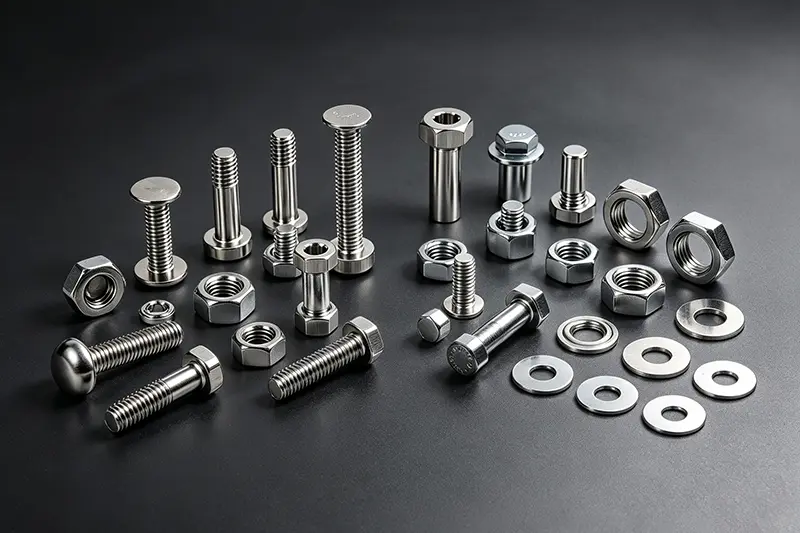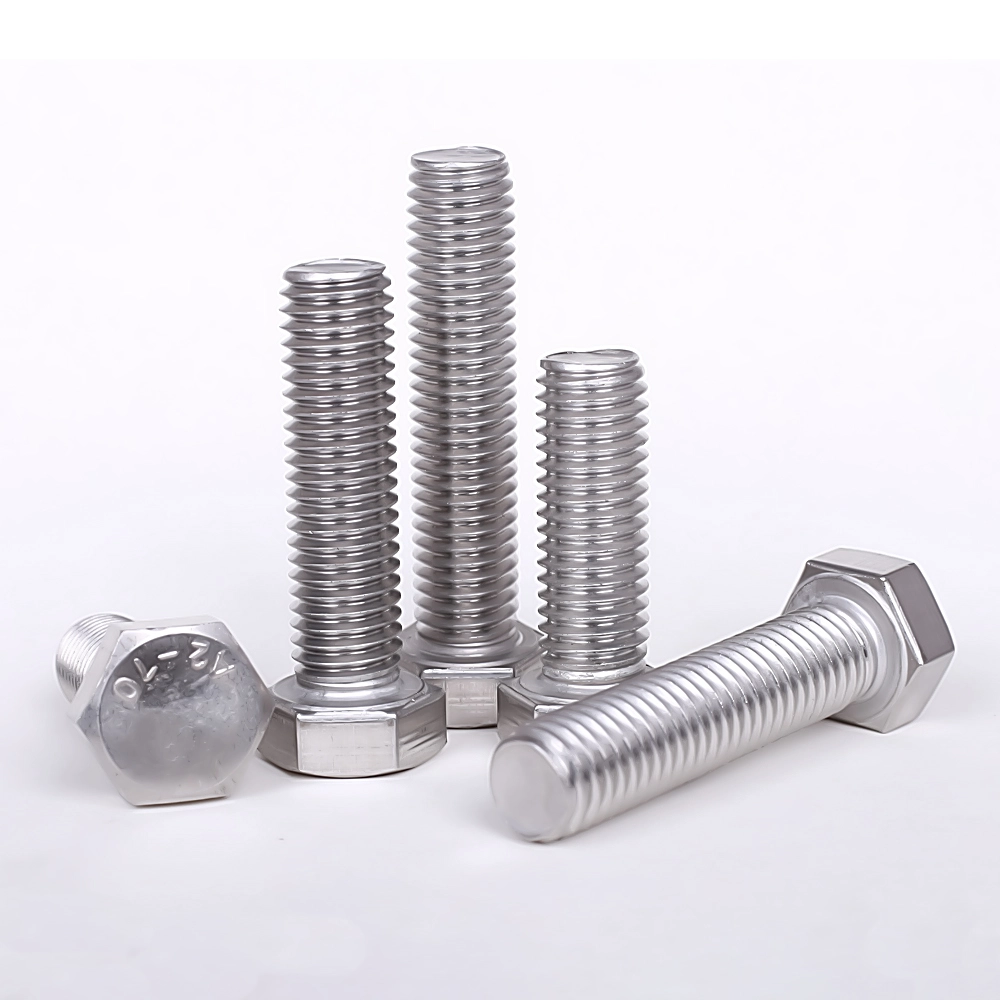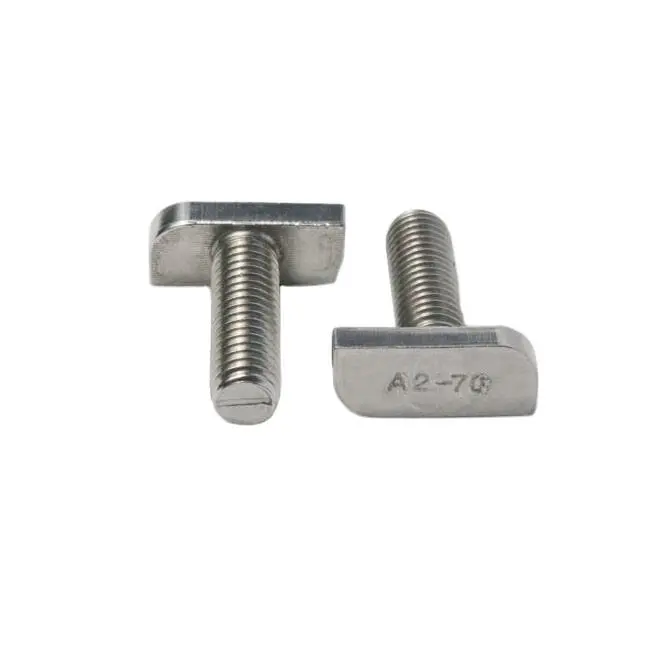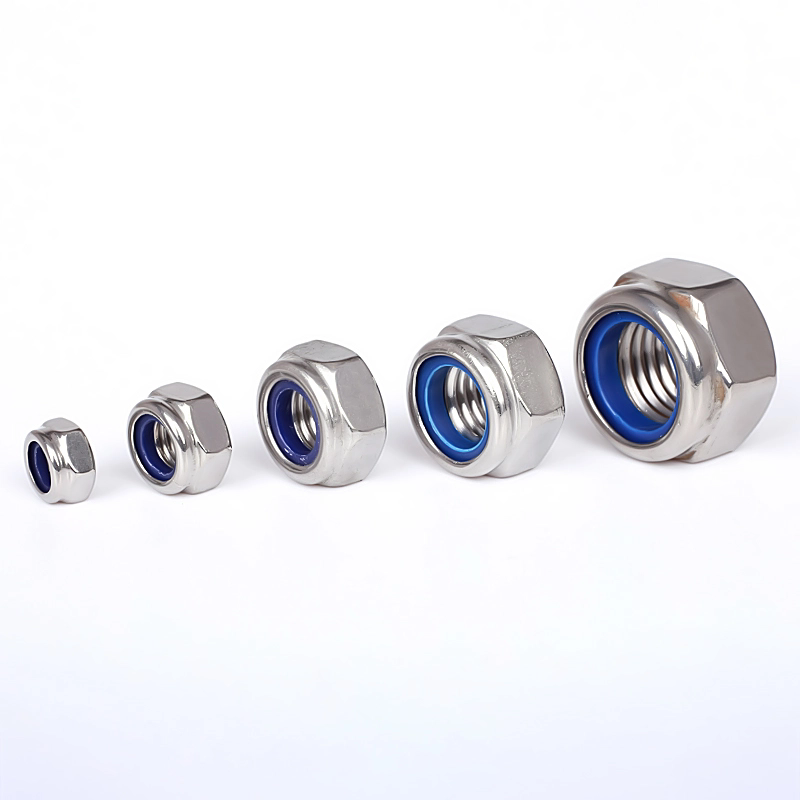
A stainless steel chemical anchor bolt combines a corrosion-resistant metal anchor with a bonding resin to create a secure fixing in suitable concrete and other approved substrates. For contractors, engineers, distributors, and industrial procurement teams, choosing the right system requires more than checking bolt dimensions. Material grade, adhesive compatibility, load requirements, embedment depth, installation conditions, and environmental exposure all influence fastening performance. This guide explains how chemical anchor bolts work, where they are used, how to select suitable materials, and which installation and purchasing details deserve careful attention.
1. What Is a Stainless Steel Chemical Anchor Bolt?
A stainless steel chemical anchor bolt is a bonded fastening component designed to secure fixtures to concrete or other substrates approved for the selected anchoring system. Unlike conventional expansion anchors, which develop holding forces through mechanical expansion, chemical anchors rely on a compatible adhesive resin to bond the embedded anchor to the surrounding substrate.
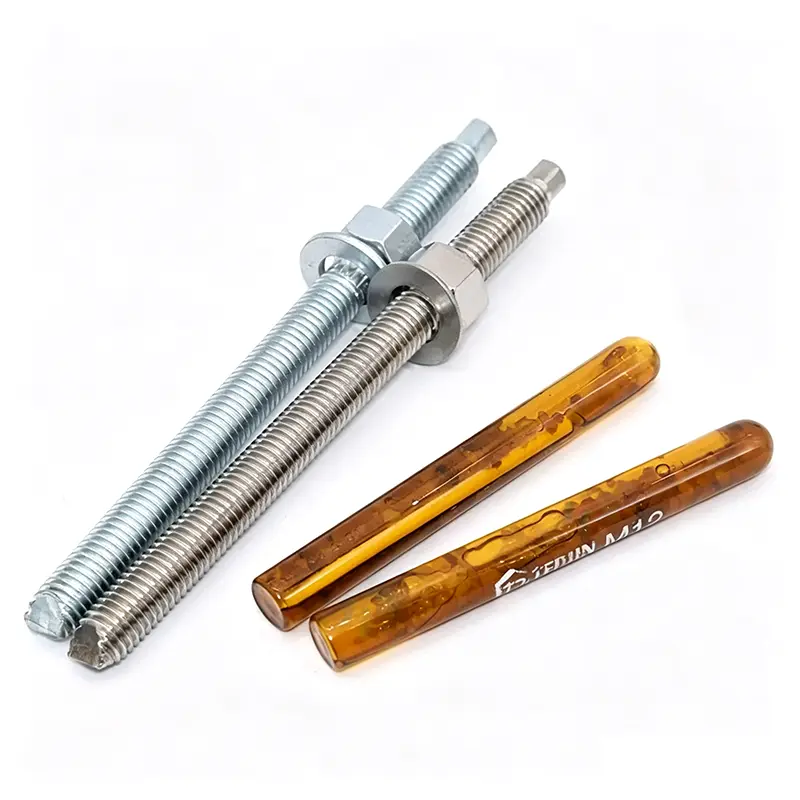
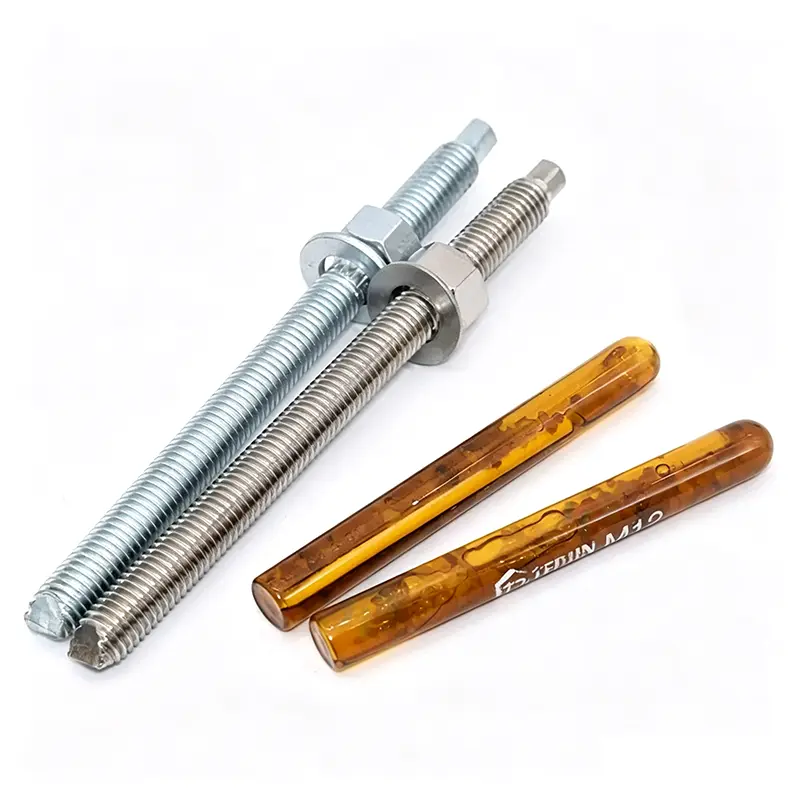
A typical installation includes a stainless steel threaded rod or anchor stud, a chemical anchoring adhesive, and a drilled hole prepared according to the system manufacturer's instructions. Nuts and washers may be used to connect and secure the fixture.
The stainless steel component provides mechanical strength and corrosion resistance, while the adhesive transfers forces between the anchor and the base material. Both elements must be suitable for the intended application. A corrosion-resistant bolt alone does not guarantee that the complete anchoring system will perform reliably.
What Are the Main Components?
- Stainless steel anchor rod: Provides the threaded connection for mounting equipment, brackets, structural components, or other fixtures.
- Chemical adhesive: Common formulations include epoxy, vinylester, and polyester resins, each with its own application limits and performance characteristics.
- Prepared substrate: Concrete or another approved base material provides the anchoring foundation.
- Connection hardware: Nuts, washers, and compatible accessories complete the fastening assembly where required.
When these components are correctly specified and installed, a chemical anchoring system can provide a dependable connection for a wide range of industrial and construction applications.
2. How Does a Chemical Anchor Bolt Work?
The principle behind chemical anchoring is adhesive bonding. After a hole is drilled and properly cleaned, the specified resin is introduced into the hole. The anchor rod is then inserted to the required embedment depth. Once the adhesive cures under the prescribed conditions, the bonded assembly can transfer loads into the substrate.
Unlike an expansion anchor, a bonded anchor does not depend on the same type of expansion mechanism to develop its holding capacity. This can make it useful where edge distances, spacing, or substrate conditions require careful consideration. However, it does not automatically eliminate cracking risks or make every installation suitable for structural loading.
Understanding Load Transfer
Loads applied to the fixture are transferred through the anchor rod and adhesive interface into the surrounding substrate. Depending on the design, the connection may experience tensile loads, shear loads, or a combination of both.
Performance depends on several interacting factors, including anchor diameter, embedment depth, concrete strength, edge distance, anchor spacing, adhesive properties, and installation quality. For safety-critical applications, the complete system should be designed using applicable codes, product approvals, and verified technical data.
Adhesive curing time is not the same as working time. The anchor must remain undisturbed for the period specified by the adhesive manufacturer. Temperature, moisture conditions, and the selected resin can affect installation and curing requirements.
3. Key Benefits for Industrial Projects
Stainless steel chemical anchor bolts are valued for their combination of corrosion-resistant materials, bonded installation, and flexible application options. Their suitability still depends on selecting the correct product configuration for the actual service environment.
3.1 Corrosion Resistance
Stainless steel contains chromium, which helps form a protective passive surface film. This provides resistance to many forms of atmospheric and aqueous corrosion. Appropriate stainless steel grades can help reduce rust-related maintenance in humid facilities, outdoor installations, and selected coastal or industrial environments.
However, stainless steel is not corrosion-proof. Chlorides, aggressive chemicals, elevated temperatures, and unsuitable combinations of metals can create corrosion risks. Material selection should therefore reflect actual exposure conditions rather than the general label of stainless steel.
3.2 Secure Bonded Fixing
When properly designed and installed, a chemical anchor can transfer loads through the adhesive bond between the anchor and the substrate. The absence of a conventional expansion mechanism may be beneficial in certain applications where expansion forces require particular attention.
3.3 Flexible Installation Options
Depending on the product approval and adhesive system, chemical anchors can be used for a variety of fixture types and installation layouts. They may also be suitable for certain post-installed fastening requirements where cast-in anchors are impractical.
3.4 Potential for Reduced Maintenance
Choosing a suitable stainless steel grade can help reduce corrosion-related maintenance and replacement work. For facility operators and procurement teams, this can support long-term asset management when the initial specification, installation, and inspection practices are appropriate.
4. Common Applications and Industries
Stainless steel chemical anchor bolts are used in projects where a reliable bonded connection and suitable corrosion resistance are required. Typical applications include:
- Construction and infrastructure: Fixing brackets, support assemblies, handrails, and approved structural attachments to concrete.
- Marine and coastal facilities: Mounting selected equipment and support components in environments exposed to humid air or salt spray, subject to appropriate material selection.
- Water and wastewater facilities: Securing approved fixtures, pipe supports, equipment frames, and service components.
- Industrial manufacturing: Installing machine supports, equipment bases, mounting brackets, and maintenance-related fixtures.
- Commercial buildings: Fixing compatible architectural components, service supports, and selected building accessories.
- Energy and utility projects: Supporting approved equipment installations where environmental exposure and load requirements have been evaluated.
Not every chemical anchor is suitable for every application. Overhead installations, cracked concrete, seismic conditions, sustained loading, and safety-critical structural connections may require specifically qualified products and engineered installation procedures.
5. How to Select the Right Stainless Steel Grade
Material grade is one of the most important purchasing decisions for stainless steel chemical anchor bolts. Two products with identical dimensions can have different corrosion resistance and mechanical properties because of their material composition and manufacturing specifications.
| Material | Typical Characteristics | Selection Considerations |
|---|---|---|
| SS 304 / A2 | Good general corrosion resistance in many indoor and outdoor environments. | Commonly considered for general construction and applications without severe chloride exposure. |
| SS 316 / A4 | Contains molybdenum, which improves resistance to chloride-related pitting compared with SS 304 in many conditions. | Often considered for coastal, marine, and other more demanding environments after exposure assessment. |
| Specialty alloys | May provide enhanced resistance to particular corrosive media or demanding service conditions. | Requires application-specific engineering review and confirmation of availability and mechanical properties. |
SS 304 is often suitable for general-purpose fastening, while SS 316 may be more appropriate where chlorides are present. Neither grade should be selected solely on the basis of a broad application label. Continuous immersion, swimming pool environments, concentrated chemicals, and certain industrial atmospheres may require additional evaluation.
Match the Grade to the Exposure
Before confirming a material grade, consider whether the anchor will be exposed to saltwater, cleaning agents, process chemicals, condensation, de-icing salts, or elevated temperatures. Also evaluate contact with other metals, because dissimilar-metal contact in the presence of moisture can cause galvanic corrosion.
For procurement purposes, request clear material identification and any applicable test documentation. Where mechanical strength is critical, confirm the specified property class, dimensional tolerances, and relevant product standards rather than relying on the stainless steel grade alone.
6. What Factors Affect Anchor Performance?
Selecting the right stainless steel chemical anchor bolt requires a system-level assessment. A high-quality anchor rod may still underperform if the adhesive is unsuitable, the substrate is weak, or installation requirements are not followed.
6.1 Load Requirements
Identify the expected tensile, shear, and combined loads. Consider whether the load is static, cyclic, dynamic, or associated with vibration. The design must also account for the fixture geometry and the consequences of connection failure.
6.2 Substrate Condition
Concrete strength, cracking, age, condition, and thickness can affect the anchoring design. Masonry and other substrates require separate compatibility checks. Do not assume that a product approved for solid concrete can be used in hollow masonry or other base materials without verification.
6.3 Embedment Depth and Edge Distance
The embedment depth, spacing between anchors, and distance from concrete edges influence the load capacity and failure modes of the connection. Increasing embedment depth does not automatically produce a proportional increase in capacity. Follow the design calculations and approved installation parameters.
6.4 Adhesive Compatibility and Temperature
Different resin systems have different curing times, installation temperature limits, moisture tolerances, and chemical resistance. Select an adhesive suitable for the substrate and expected service conditions, and follow its technical instructions.
6.5 Installation Quality
Incorrect drilling, incomplete hole cleaning, insufficient resin filling, premature loading, or improper anchor placement can compromise performance. Consistent workmanship and inspection are essential for reliable results.
- Confirm the substrate and expected load conditions.
- Specify the stainless steel grade and required mechanical properties.
- Verify adhesive compatibility and environmental limitations.
- Confirm diameter, length, thread specification, and embedment requirements.
- Review product approvals, technical documentation, and installation instructions.
7. Installation Best Practices
Correct installation is essential to the performance of a stainless steel chemical anchor bolt. The following sequence provides a general overview. The selected adhesive manufacturer's instructions and the approved anchor design always take precedence.
Step 1: Verify the Installation Requirements
Check the approved anchor type, hole diameter, drilling depth, embedment depth, edge distance, spacing, and environmental limits before beginning work. Confirm that the substrate is suitable for the selected system.
Step 2: Drill the Hole Correctly
Use the specified drilling method and equipment to produce a hole with the required diameter and depth. Avoid damaging embedded reinforcement or utilities, and follow the project requirements for reinforcement scanning where necessary.
Step 3: Clean the Hole Thoroughly
Remove drilling dust and debris using the cleaning method specified by the adhesive manufacturer. This may involve a combination of brushing and blowing or approved vacuum equipment. Hole cleanliness is important because residual dust can interfere with bonding.
Step 4: Dispense the Adhesive
Prepare the cartridge and mixing nozzle according to the manufacturer's instructions. Discard the initial material if required to ensure uniform mixing. Fill the hole in the prescribed manner, minimizing trapped air and incomplete filling.
Step 5: Insert the Anchor Rod
Insert the stainless steel rod to the specified embedment depth using the recommended motion and technique. Check its alignment and ensure that the installation remains within the adhesive's working time.
Step 6: Allow the Adhesive to Cure
Do not disturb, tighten, or load the anchor before the required curing period has elapsed. Follow the manufacturer's temperature-specific curing schedule and all relevant project instructions.
Step 7: Complete and Inspect the Connection
Install the fixture, nuts, and washers as specified. Apply the required tightening procedure, where applicable, and document inspections or testing required by the project. Proof testing, if specified, must follow the approved procedure and acceptance criteria.
Safety note: Structural, overhead, seismic, and other safety-critical applications require qualified design and installation personnel. A general installation sequence is not a substitute for the product's technical instructions or the project's engineering requirements.
8. Chemical Anchors vs. Mechanical Anchors
Both chemical and mechanical anchors can provide effective fastening when correctly selected. The main differences relate to how they transfer loads, their installation requirements, and the conditions under which each system is approved for use.
| Comparison Point | Chemical Anchor | Mechanical Anchor |
|---|---|---|
| Holding mechanism | Bonding through a cured adhesive system. | Mechanical engagement, expansion, or another designed locking mechanism. |
| Installation process | Requires hole preparation, adhesive placement, and curing. | Depends on the anchor type; may require expansion or specified tightening. |
| Loading time | Loading must wait until the specified curing period is complete. | May be loadable after correct installation if permitted by its instructions. |
| Design considerations | Bond strength, embedment, adhesive properties, substrate condition, and curing. | Expansion or engagement behavior, substrate strength, spacing, and installation parameters. |
| Suitable applications | Applications covered by the adhesive anchor's design and product approval. | Applications covered by the selected mechanical anchor's design and approval. |
For projects with tight installation schedules, mechanical anchors may offer practical advantages because they do not depend on adhesive curing. Chemical anchors can be advantageous where a bonded connection is preferred or the design calls for a specific post-installed anchoring system. Neither approach is universally superior; the correct choice depends on engineering requirements, site conditions, and approved product performance.
9. What Should Buyers Check Before Ordering?
For importers, distributors, contractors, and OEM purchasing teams, product consistency and specification clarity are as important as the initial quotation. A detailed inquiry helps suppliers evaluate requirements and reduces the risk of ordering incompatible or incorrectly specified components.
9.1 Confirm the Product Specification
Provide the required diameter, overall length, threaded length, thread standard, material grade, and property class. Include drawings or samples when the application involves a special geometry or non-standard configuration.
9.2 Ask for Material and Quality Documentation
Depending on the application, request material certificates, dimensional inspection records, mechanical test reports, and relevant product compliance documents. For a complete chemical anchoring system, also verify the adhesive's technical documentation and applicable approvals.
9.3 Evaluate Supplier Consistency
Reliable supply involves more than a competitive unit price. Consider manufacturing capability, quality-control procedures, batch traceability, packaging, lead time, communication, and the supplier's ability to maintain agreed specifications across repeat orders.
9.4 Clarify Packaging and Delivery Requirements
For bulk orders, confirm quantities, packaging format, labeling, shipping requirements, and documentation before production. If the components will be distributed under your own brand, discuss private-label packaging and marking requirements in advance.
9.5 Assess Total Project Cost
The lowest purchase price may not deliver the lowest overall cost. Material suitability, installation labor, adhesive waste, inspection requirements, maintenance exposure, and replacement risks can all influence the total cost of ownership.
Taizhou Wanluo Hardware Products Co.,Ltd. can be included in your supplier evaluation when sourcing stainless steel hardware and discussing product requirements. Buyers should confirm the specific chemical anchor bolt configurations, material options, documentation, and customization capabilities available for their project before placing an order.
10. Frequently Asked Questions
Q1. What is a stainless steel chemical anchor bolt used for?
It is used to secure approved fixtures, brackets, equipment supports, and other components to concrete or compatible substrates using a chemical adhesive anchoring system. The exact application depends on the anchor design, adhesive approval, environmental exposure, and load requirements.
Q2. Is SS 304 or SS 316 better for chemical anchor bolts?
SS 304 is commonly used in general environments, while SS 316 often provides improved resistance to chloride-related pitting. Marine exposure, chemical contact, immersion, and other aggressive conditions require application-specific assessment. SS 316 is not suitable for every corrosive environment.
Q3. Can chemical anchor bolts be installed in existing concrete?
Yes. Post-installed chemical anchors are commonly designed for existing concrete when the selected system is approved for the substrate and loading conditions. The concrete condition, drilling method, hole preparation, embedment depth, and installation procedure must be verified.
Q4. How long does a chemical anchor take to cure?
Curing time varies according to the resin formulation, installation temperature, and product instructions. Some systems cure relatively quickly under suitable conditions, while others require longer periods. Always follow the manufacturer's specified curing schedule before applying loads.
Q5. Can a stainless steel chemical anchor bolt be used outdoors?
Yes, provided the stainless steel grade, adhesive system, and complete anchoring design are suitable for the outdoor environment. Coastal areas, de-icing salts, industrial pollutants, and persistent moisture may require enhanced corrosion protection and more detailed engineering review.
Q6. Are chemical anchor bolts suitable for cracked concrete?
Some systems are specifically qualified for use in cracked concrete, while others may have more restrictive conditions. Verify the relevant product approval and design requirements rather than assuming that every chemical anchor can be used in cracked concrete.
Q7. How can buyers verify the quality of stainless steel anchor bolts?
Check material identification, dimensional tolerances, thread specifications, mechanical properties, surface condition, and applicable inspection records. For critical applications, request suitable material certificates and test documentation and verify that the adhesive system has the required technical approvals.
Q8. What information should be provided when requesting a quotation?
Include the product dimensions, stainless steel grade, required quantity, thread specification, application environment, packaging needs, and any applicable standards. Drawings, samples, project requirements, and documentation requests can help the supplier evaluate the inquiry more accurately.
Need a Reliable Stainless Steel Chemical Anchor Bolt Supplier?
Choosing the right anchoring components starts with clear specifications, suitable materials, and a supplier that understands your application requirements. Whether you are sourcing stainless steel hardware for construction, industrial equipment, infrastructure, or distribution, careful product evaluation can help support consistent quality and dependable project planning.
Taizhou Wanluo Hardware Products Co.,Ltd. welcomes inquiries from international buyers, distributors, contractors, and OEM procurement teams interested in stainless steel hardware solutions.
Share your drawings, dimensions, material requirements, target quantities, and application details to discuss suitable product options and quotation requirements.
Contact us today to discuss your stainless steel chemical anchor bolt sourcing needs and request further product information.