Language
- English
- Español
- Português
- русский
- Français
- 日本語
- Deutsch
- tiếng Việt
- Italiano
- Nederlands
- ภาษาไทย
- Polski
- 한국어
- Svenska
- magyar
- Malay
- বাংলা ভাষার
- Dansk
- Suomi
- हिन्दी
- Pilipino
- Türkçe
- Gaeilge
- العربية
- Indonesia
- Norsk
- تمل
- český
- ελληνικά
- український
- Javanese
- فارسی
- தமிழ்
- తెలుగు
- नेपाली
- Burmese
- български
- ລາວ
- Latine
- Қазақша
- Euskal
- Azərbaycan
- Slovenský jazyk
- Македонски
- Lietuvos
- Eesti Keel
- Română
- Slovenski
- मराठी
- Srpski језик

How Does DIN571 Lag Bolt Hex Tapping Screw Deliver Reliable Wood and Construction Connections?
2026-08-26
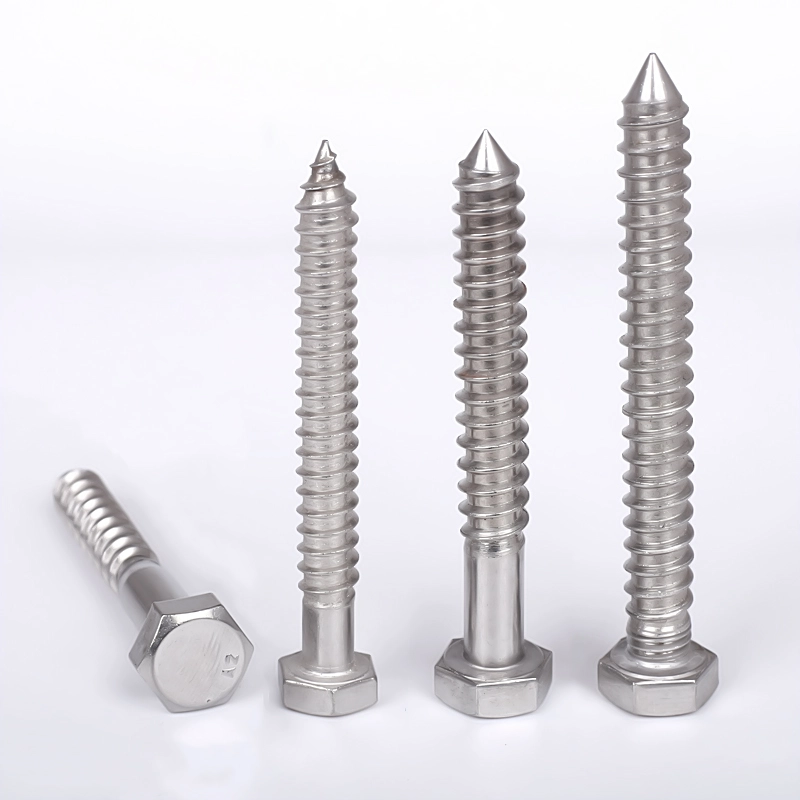
DIN571 Lag Bolt Hex Tapping Screw is widely used for heavy-duty fastening where strong connections between wood, metal brackets, masonry-related components, and structural hardware are required. Its hexagonal head provides practical wrench access, while the coarse thread is designed to develop strong holding power in suitable base materials. This guide explains its construction, applications, installation practices, material considerations, common purchasing problems, and quality checkpoints so buyers can select and use DIN571 fasteners with greater confidence.
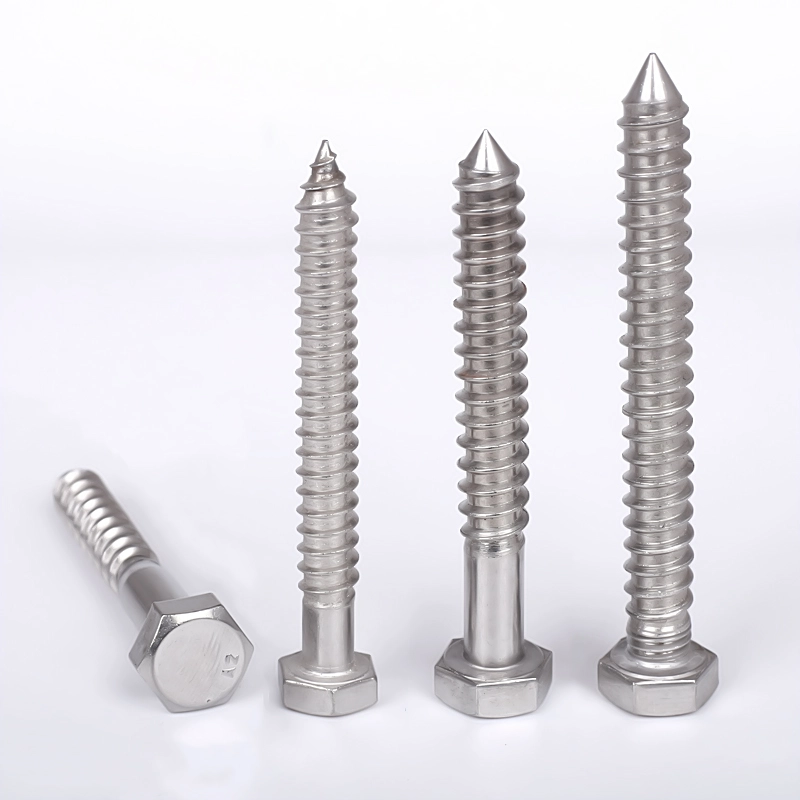
Table of Contents
- DIN571 Lag Bolt Hex Tapping Screw at a Glance
- Key Construction and Design Features
- Where DIN571 Fasteners Are Commonly Used
- Why the Hex-Head Design Matters
- Material and Surface Treatment Considerations
- Important Purchasing and Specification Points
- Installation Practices for Reliable Results
- Common Problems and How to Prevent Them
- DIN571 Compared with Other Common Fasteners
- Quality Control Considerations for Bulk Buyers
- Frequently Asked Questions
- Final Considerations
DIN571 Lag Bolt Hex Tapping Screw at a Glance
Fasteners used in construction and woodworking must do more than simply hold two components together. They need to provide dependable mechanical engagement, withstand installation forces, remain compatible with the application environment, and maintain practical performance throughout their service life.
The DIN571 Lag Bolt Hex Tapping Screw is a familiar fastening solution for applications requiring a relatively large, wrench-driven head and a coarse threaded shank. The designation DIN 571 is associated with hexagon head wood screws, although commercial product descriptions may use terms such as lag screw, lag bolt, or hex tapping screw depending on the market.
Its hexagonal head makes it possible to apply torque with a suitable wrench or socket. The coarse thread is particularly useful in timber and other compatible substrates where the screw must create substantial mechanical engagement.
For importers, distributors, furniture manufacturers, construction hardware suppliers, and engineering purchasers, understanding the actual specifications behind the product name is essential. Diameter, length, material, surface finish, thread geometry, head dimensions, and manufacturing consistency can all influence the final performance.
Key Construction and Design Features
A DIN571-style fastener combines several features that work together to produce a practical heavy-duty fastening system.
| Feature | Function | Buyer Consideration |
|---|---|---|
| Hexagonal head | Allows wrench or socket installation | Check head dimensions and tool compatibility |
| Coarse thread | Creates strong engagement in suitable substrates | Match thread geometry to the base material |
| Pointed tip | Facilitates penetration into the substrate | Inspect point consistency and sharpness |
| Steel body | Provides structural fastening strength | Confirm grade, mechanical properties, and documentation |
| Protective finish | Improves resistance to environmental exposure | Choose coating according to service conditions |
The combination of a large hexagonal head and coarse external thread makes this fastener especially practical when installation torque and holding power are important. However, fastener performance is never determined by the screw alone. The substrate, pilot-hole preparation, installation torque, load direction, spacing, and environmental conditions all have an influence.
Where DIN571 Fasteners Are Commonly Used
DIN571 fasteners are commonly associated with timber and general construction-related fastening. Their exact application should always be evaluated according to the fastener specification and the structural requirements of the project.
- Timber construction: Suitable applications may include fastening timber components, brackets, and hardware where the selected screw size matches the required load.
- Woodworking: They can be used for heavy-duty woodworking assemblies that require greater holding capability than small wood screws.
- Outdoor structures: With an appropriate corrosion-resistant finish, selected sizes may be used in outdoor timber projects.
- Hardware installation: Hex-head screws are useful for securing metal brackets, plates, fittings, and other hardware to compatible substrates.
- Furniture and utility structures: Certain heavy-duty assemblies can benefit from coarse-thread fastening where appearance and installation method permit a hex head.
- General maintenance: Repair and maintenance applications may use these screws when the existing structure and load requirements are suitable.
For safety-critical or structural applications, buyers should not assume that a standard DIN designation alone proves suitability for a particular load. Engineering calculations, applicable building standards, manufacturer documentation, and project-specific requirements should be considered where necessary.
Why the Hex-Head Design Matters
The head is one of the most visible differences between DIN571-style fasteners and many conventional screw designs. A hexagonal head allows torque to be transferred through a wrench or socket rather than a screwdriver bit.
This can be particularly useful when the fastening point requires relatively high installation torque or when the operator needs a secure grip on the fastener during installation.
Practical benefits of a hexagonal head include:
- Positive engagement with an appropriate wrench or socket.
- Convenient installation in heavy-duty fastening applications.
- Easy visual inspection after installation.
- Practical access for tightening or removal during maintenance.
- Compatibility with common mechanical installation tools when dimensions are correctly matched.
At the same time, excessive tightening should be avoided. Applying too much torque can damage the screw, strip the substrate, crush wood fibers, or reduce the effectiveness of the joint. Good installation is therefore a balance between sufficient clamping force and protection of the base material.
Material and Surface Treatment Considerations
Material selection becomes increasingly important when DIN571 fasteners are exposed to humidity, rain, chemicals, salt, temperature changes, or other demanding conditions.
Carbon steel is commonly used where strength and cost efficiency are priorities. Protective coatings can improve resistance to corrosion, but the appropriate finish depends on the environment and expected service life.
For applications exposed to moisture or corrosive atmospheres, buyers may consider stainless steel or other corrosion-resistant solutions where the required mechanical and environmental characteristics are appropriate.
| Option | Typical Benefit | Consideration |
|---|---|---|
| Plain steel | Simple and economical | Limited corrosion resistance without additional protection |
| Zinc-coated steel | Improved surface corrosion protection | Coating quality and thickness should be verified |
| Stainless steel | Strong corrosion resistance for suitable grades | Higher material cost and grade-specific properties |
Buyers should also consider galvanic compatibility when fasteners are installed with dissimilar metals. The coating or material that works well in one environment may not be appropriate in another.
Important Purchasing and Specification Points
One of the biggest purchasing mistakes is ordering fasteners based only on a product name. A professional specification should identify the dimensions, material, finish, quantity, packaging, and applicable standard requirements.
Before placing a bulk order, verify:
- Nominal diameter: Confirm the required screw diameter for the application.
- Overall length: Make sure the length provides sufficient engagement without unnecessary penetration.
- Head dimensions: Check head width and height where clearance is limited.
- Thread dimensions: Confirm that the thread form corresponds with the intended application.
- Material: Specify the required steel or stainless-steel grade rather than relying on generic descriptions.
- Surface treatment: State the required coating or finish and any relevant corrosion requirements.
- Packaging: For distribution, packaging quantity and labeling can be just as important as the fastener itself.
- Inspection requirements: Define dimensional, appearance, mechanical, coating, and quantity checks before shipment.
For international purchasing, it is also useful to request product drawings, specification sheets, sample approval, and inspection documentation before committing to a large production run.
Installation Practices for Reliable Results
Even a correctly manufactured fastener can perform poorly when installation is unsuitable. Wood density, moisture content, screw diameter, embedment depth, edge distance, and pilot-hole preparation can all affect fastening performance.
A practical installation sequence is:
- Inspect the screw and confirm that its size and finish match the application.
- Mark the fastening location accurately.
- Determine whether pilot drilling is appropriate for the material and screw dimensions.
- Use a properly sized drill and suitable drilling technique when a pilot hole is required.
- Position the components correctly before inserting the fastener.
- Drive the screw using a suitable wrench or socket.
- Apply controlled torque rather than forcing the fastener beyond the material's capacity.
- Inspect the completed joint for proper seating, alignment, and substrate damage.
For engineered structural connections, installation should follow the relevant design specification rather than relying solely on general workshop practice.
Common Problems and How to Prevent Them
| Problem | Possible Cause | Prevention |
|---|---|---|
| Head damage | Incorrect tool or excessive torque | Use the correct socket and controlled installation force |
| Wood splitting | Improper location, insufficient preparation, or excessive diameter | Review edge distance and pilot-hole requirements |
| Thread stripping | Weak substrate or over-tightening | Match screw dimensions and torque to the material |
| Corrosion | Unsuitable material or surface finish | Select the finish according to environmental exposure |
| Poor alignment | Components move during installation | Clamp or position components before fastening |
DIN571 Compared with Other Common Fasteners
Choosing a fastener should begin with the joint requirements rather than the assumption that one screw type is universally better than another.
| Fastener Type | Typical Characteristic | Potential Application |
|---|---|---|
| DIN571 hex-head wood screw | Coarse thread with hexagonal head | Heavy-duty wood and hardware fastening |
| Machine screw | Designed primarily for mating threads or nuts | Metal assemblies and pre-threaded components |
| Self-drilling screw | Drilling point for suitable sheet-metal applications | Metal-to-metal fastening |
| Coach screw | Common commercial term for heavy-duty wood screws | Timber and general construction applications |
Terminology can vary significantly between countries and suppliers. Therefore, a drawing or technical specification is usually more reliable than a translated product name when ordering internationally.
Quality Control Considerations for Bulk Buyers
For wholesalers and industrial buyers, consistency across thousands of pieces can be more important than the performance of a single sample. A robust quality-control process should examine the product from raw material through final packing.
- Dimensional inspection: Verify diameter, length, head dimensions, and thread characteristics.
- Surface inspection: Check for burrs, cracks, coating defects, discoloration, or other visible irregularities.
- Material verification: Confirm that the supplied material corresponds with the agreed specification.
- Thread inspection: Examine thread continuity, profile, and consistency.
- Head inspection: Confirm that the hexagonal head is properly formed and suitable for the intended tool.
- Coating inspection: Where applicable, verify coating coverage and required performance.
- Packaging inspection: Check quantities, labels, carton condition, and product identification.
Taizhou Wanluo Hardware Products Co.,Ltd. can be presented to international buyers as a potential supplier contact for DIN571 Lag Bolt Hex Tapping Screw requirements. When evaluating any supplier, buyers should confirm current specifications, samples, production capabilities, quality-control procedures, lead times, packaging requirements, and applicable documentation before placing an order.
Frequently Asked Questions
1. What is a DIN571 Lag Bolt Hex Tapping Screw?
It is a hexagon-head wood screw type associated with DIN 571. It typically features a pointed end and coarse external thread designed for suitable fastening applications, particularly in timber and related construction hardware.
2. Is DIN571 the same as a lag bolt?
The terms are often used interchangeably in commercial markets, but terminology varies by region. DIN571 specifically refers to a standardized hexagon-head wood screw designation, while “lag bolt” is a broader commercial term.
3. Can DIN571 screws be used outdoors?
They can be considered for suitable outdoor applications when the material and surface finish provide appropriate corrosion resistance. The correct choice depends on humidity, exposure, installation environment, and expected service life.
4. Does every DIN571 screw have the same strength?
No. Fastener performance depends on material, dimensions, manufacturing quality, and other specifications. A DIN designation should not be treated as a substitute for the complete product specification.
5. Should a pilot hole be drilled before installing a DIN571 screw?
In many wood applications, pilot-hole preparation can help reduce splitting and installation resistance. The appropriate hole size depends on the wood species, screw dimensions, grain direction, and application.
6. How should I choose the screw length?
The length should provide adequate thread engagement in the receiving material while avoiding unnecessary penetration into hidden components or surfaces. For engineered joints, the required embedment should be determined from the applicable design requirements.
7. What information should I provide when requesting a quotation?
Provide the required diameter, length, material, surface finish, standard, quantity, packaging, destination market, and any inspection or documentation requirements. A drawing or reference sample can further reduce specification misunderstandings.
8. What should bulk buyers inspect before shipment?
Important checks include dimensions, thread quality, head formation, surface finish, material documentation, quantity, packaging, and overall appearance. Third-party inspection can also be considered for larger or specification-sensitive orders.
Final Considerations
DIN571 Lag Bolt Hex Tapping Screw remains a practical fastening solution when its dimensions, material, finish, and installation method are correctly matched to the application. Its hexagonal head supports wrench-based installation, while its coarse thread provides useful engagement in appropriate substrates.
The most reliable purchasing strategy is to look beyond the product name. Confirm the complete specification, evaluate the working environment, consider corrosion requirements, check dimensional consistency, and establish clear inspection standards before mass production or shipment.
Need DIN571 Lag Bolt Hex Tapping Screw for Your Market?
If you are sourcing DIN571 fasteners for construction, woodworking, hardware distribution, or industrial applications, clear specifications are the first step toward receiving consistent products. Taizhou Wanluo Hardware Products Co.,Ltd. can be contacted to discuss product dimensions, materials, surface treatments, packaging, quantities, and other purchasing requirements.
Contact us to discuss your DIN571 Lag Bolt Hex Tapping Screw requirements and request product information for your next project or bulk order.
Related News
- What Makes Stainless Steel T Bolt a Reliable Choice for Modern Fastening?
- Can automated‑assembly disruptions stem from GB818 Pan Head Cross Recessed Machine Screw batch variations?
- How Does a Hex Socket Combination Screw Improve Fastening Performance?
- What procurement mistakes cause Stainless Steel Wire Rope project failures?
- Do surface‑perfect samples mask Conical Cap Expansion Bolt field‑project risks?