Language
- English
- Español
- Português
- русский
- Français
- 日本語
- Deutsch
- tiếng Việt
- Italiano
- Nederlands
- ภาษาไทย
- Polski
- 한국어
- Svenska
- magyar
- Malay
- বাংলা ভাষার
- Dansk
- Suomi
- हिन्दी
- Pilipino
- Türkçe
- Gaeilge
- العربية
- Indonesia
- Norsk
- تمل
- český
- ελληνικά
- український
- Javanese
- فارسی
- தமிழ்
- తెలుగు
- नेपाली
- Burmese
- български
- ລາວ
- Latine
- Қазақша
- Euskal
- Azərbaycan
- Slovenský jazyk
- Македонски
- Lietuvos
- Eesti Keel
- Română
- Slovenski
- मराठी
- Srpski језик

How Do Stainless Steel L Type Foundation Bolts Ensure Reliable Structural Anchoring?
2026-11-09
Stainless Steel L Type Foundation Bolts play an important role in securing structural components to concrete foundations. Their distinctive L-shaped design provides mechanical anchoring, while stainless steel offers excellent corrosion resistance and long-term durability in demanding environments. This article explores their structure, material grades, specifications, applications, installation procedures, and purchasing considerations to help engineers, contractors, and procurement professionals select suitable foundation fasteners for their projects.
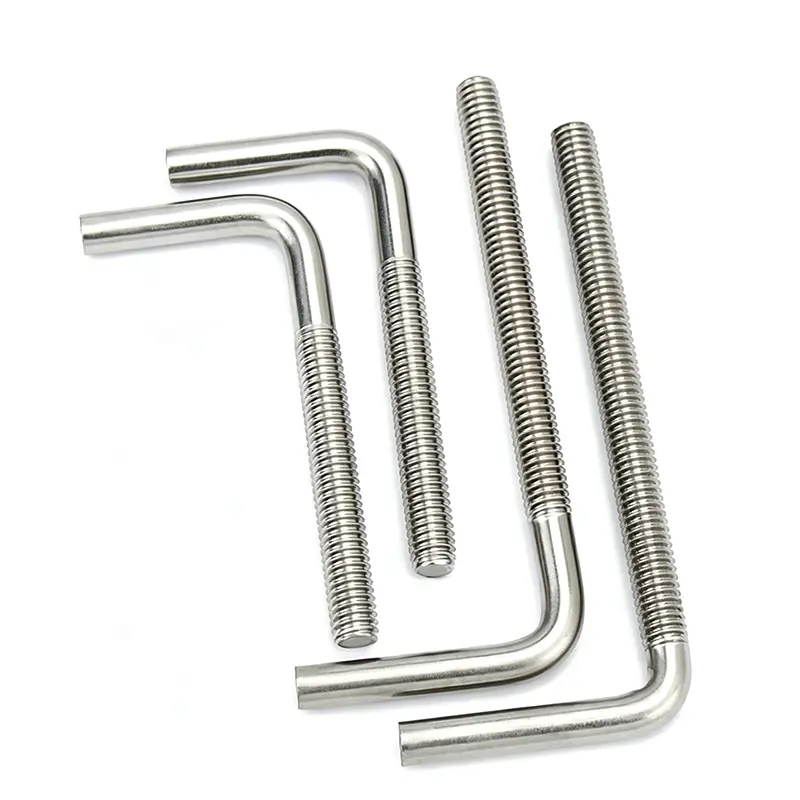
Table of Contents
- Understanding Stainless Steel L Type Foundation Bolts
- How Does the L-Shaped Design Work?
- Which Stainless Steel Materials Are Commonly Used?
- Important Specifications and Dimensions
- Key Advantages of Stainless Steel Foundation Bolts
- Common Industrial and Construction Applications
- How to Install L Type Foundation Bolts Correctly
- How to Select the Right Foundation Bolts
- Common Installation and Purchasing Problems
- Quality Control and Manufacturing Considerations
- Choosing a Reliable Foundation Bolt Manufacturer
- Frequently Asked Questions
- Conclusion
1. Understanding Stainless Steel L Type Foundation Bolts
Foundation bolts are essential fasteners used to connect structural equipment, steel frameworks, and other components to concrete foundations. Among the different anchor bolt designs available, L-shaped foundation bolts are widely used because of their straightforward structure and effective mechanical anchoring performance.
Stainless Steel L Type Foundation Bolts feature a threaded upper section and a bent lower end. The threaded portion allows nuts and washers to secure equipment or structural plates, while the embedded L-shaped section helps resist pullout forces within the concrete.
Unlike ordinary carbon steel fasteners, stainless steel foundation bolts offer improved resistance to moisture, oxidation, and many corrosive environments. This makes them particularly useful in outdoor construction, industrial facilities, coastal projects, and installations exposed to changing weather conditions.
For engineers and purchasing teams, selecting the correct foundation bolt involves more than choosing a suitable diameter. Material grade, embedment depth, thread length, load requirements, installation conditions, and concrete characteristics must all be considered.
Key Point:
A suitable foundation bolt should provide reliable anchoring, appropriate mechanical strength, dimensional accuracy, and corrosion resistance throughout the expected service life of the structure.
2. How Does the L-Shaped Design Work?
The defining feature of an L type foundation bolt is its bent lower end. This shape creates a mechanical anchoring mechanism inside the concrete foundation.
2.1 Main Structural Components
A typical L-shaped foundation bolt consists of the following parts:
- Threaded End: The upper section features external threads for fastening nuts and washers.
- Straight Shank: The main body connects the threaded portion to the embedded section.
- Bent Anchor End: The lower end is bent at approximately 90 degrees to provide mechanical resistance against pullout.
- Nut and Washer: These accessories help distribute clamping forces and secure the connected structural component.
2.2 Why Is the L Shape Important?
When an L-shaped foundation bolt is embedded in concrete, the bent end provides resistance through mechanical bearing and interaction with the surrounding concrete. This helps the bolt transfer tensile forces from the connected equipment or structure into the foundation.
The anchoring performance depends on several factors, including:
- Embedment depth and bent-end dimensions.
- Concrete compressive strength and condition.
- Distance between adjacent anchor bolts.
- Distance from the bolt to the concrete edge.
- Applied tensile, shear, and combined loads.
- Installation accuracy and reinforcement arrangement.
Engineering Reminder:
An L-shaped bend does not automatically guarantee a specific load capacity. Foundation bolt dimensions and anchoring details should be determined through appropriate structural calculations and project requirements.
3. Which Stainless Steel Materials Are Commonly Used?
Material selection directly affects the corrosion resistance, mechanical properties, durability, and overall cost of foundation bolts. Different stainless steel grades are suitable for different operating environments.
3.1 Stainless Steel 304
304 stainless steel is a widely used austenitic stainless steel grade. It contains chromium and nickel, providing good general corrosion resistance and suitable mechanical properties for many construction applications.
Common applications include:
- Indoor industrial equipment foundations.
- General building construction.
- Machinery installation.
- Outdoor structures in relatively mild environments.
3.2 Stainless Steel 316
316 stainless steel contains molybdenum, which improves its resistance to chloride-related corrosion compared with 304 in many environments.
It is often considered for:
- Coastal construction projects.
- Marine-related equipment installations.
- Chemical processing facilities.
- Outdoor structures exposed to salt and moisture.
3.3 Comparison of Common Stainless Steel Grades
| Material | Corrosion Resistance | Typical Applications | Selection Considerations |
|---|---|---|---|
| 304 Stainless Steel | Good general resistance | General construction and industrial equipment | Suitable for many ordinary environments |
| 316 Stainless Steel | Improved chloride resistance | Coastal, marine, and chemical environments | Consider for more demanding exposure conditions |
| Other Stainless Steel Grades | Depends on alloy composition | Specialized industrial applications | Evaluate mechanical and corrosion requirements individually |
It is important to remember that stainless steel is not completely immune to corrosion. Chloride concentration, temperature, surface contamination, crevice conditions, and maintenance practices can all affect long-term performance.
Therefore, engineers should select materials according to actual environmental exposure rather than relying solely on the stainless steel designation.
4. Important Specifications and Dimensions
Choosing the correct specifications is essential for ensuring that foundation bolts fit the installation design and meet structural requirements.
4.1 Common Dimensional Parameters
When requesting Stainless Steel L Type Foundation Bolts, buyers should pay attention to the following dimensions:
| Parameter | Description | Why It Matters |
|---|---|---|
| Diameter | Nominal diameter of the bolt shank | Influences tensile capacity and connection compatibility |
| Total Length | Overall bolt length | Determines whether the bolt suits the foundation design |
| Thread Length | Length of the threaded section | Ensures sufficient engagement with nuts |
| Bend Length | Length of the bent anchor section | Affects the anchoring geometry |
| Bend Angle | Angle between the straight and bent sections | Determines installation configuration |
| Material Grade | Specified stainless steel grade | Determines material characteristics |
4.2 Common Sizes and Custom Dimensions
Foundation bolts are available in different diameters and lengths depending on equipment weight, structural design, and installation conditions. Metric thread sizes such as M12, M16, M20, M24, and M30 may be encountered in construction and industrial applications.
However, these are examples rather than universal specifications. The required dimensions should always be confirmed against engineering drawings and project documentation.
4.3 Standard and Customized Production
Standardized products can simplify procurement for common projects. However, specialized equipment foundations may require customized dimensions, thread lengths, bend configurations, or material grades.
Before placing an order, buyers should prepare a technical drawing or provide a detailed dimensional specification to reduce misunderstandings during production.
5. Key Advantages of Stainless Steel Foundation Bolts
Stainless steel L type foundation bolts provide several practical benefits for construction contractors, equipment manufacturers, and industrial project developers.
5.1 Excellent Corrosion Resistance
Stainless steel contains chromium, which forms a passive protective layer on the material surface. This layer helps protect the underlying metal from corrosion in many environments.
For installations exposed to rain, humidity, and outdoor conditions, suitable stainless steel grades can reduce corrosion-related maintenance requirements.
5.2 Reliable Mechanical Anchoring
The L-shaped configuration creates a mechanical anchoring effect within concrete. When properly designed and installed, it helps transfer forces between the connected structure and the foundation.
5.3 Long-Term Durability
Foundation bolts are often installed in locations that are difficult and expensive to access after construction. Selecting suitable materials and dimensions at the beginning of a project can help reduce future repair and replacement work.
5.4 Flexible Customization
Manufacturers can produce foundation bolts according to specified diameters, lengths, thread configurations, and stainless steel grades. This flexibility supports different structural designs and equipment installation requirements.
5.5 Lower Maintenance Requirements
In suitable environments, stainless steel fasteners can reduce the need for frequent corrosion protection treatments compared with conventional carbon steel alternatives. Nevertheless, inspection and maintenance remain important, especially in aggressive industrial environments.
6. Common Industrial and Construction Applications
Stainless Steel L Type Foundation Bolts are used in projects where equipment and structural components must be securely connected to concrete foundations.
6.1 Industrial Machinery Foundations
Industrial equipment such as pumps, compressors, processing machines, and production-line systems may require foundation bolts to maintain stable positioning.
Correct bolt placement helps ensure alignment and supports the transfer of operational forces into the concrete foundation.
6.2 Steel Structure Installation
Steel columns, support frames, and structural bases often require anchor bolts to connect steel components with reinforced concrete foundations.
6.3 Outdoor Infrastructure
Outdoor infrastructure installations may experience continuous exposure to rainfall, temperature changes, and environmental contaminants. Suitable stainless steel foundation bolts can help improve the durability of these connections.
6.4 Marine and Coastal Projects
Coastal structures and marine equipment may be exposed to salt spray and chloride-containing moisture. In such conditions, 316 stainless steel or another appropriately selected corrosion-resistant material may be considered.
6.5 Renewable Energy Equipment
Wind energy systems, solar power structures, and other outdoor energy installations use anchoring components to secure equipment and supporting structures. Foundation bolt selection should consider wind loads, vibration, environmental exposure, and project-specific engineering requirements.
Application Insight:
The best foundation bolt is not necessarily the largest or most expensive option. It is the one that meets the structural, environmental, dimensional, and installation requirements of the specific project.
7. How to Install L Type Foundation Bolts Correctly
Proper installation is just as important as material quality. Even a well-manufactured foundation bolt may fail to perform as intended if its position, embedment depth, or alignment is incorrect.
Step 1: Review Engineering Drawings
Before installation, review the foundation drawings and confirm bolt diameter, length, spacing, embedment depth, orientation, and positioning tolerances.
Step 2: Prepare the Positioning Template
A positioning template or bolt-setting frame can help maintain accurate spacing and alignment. This is particularly important when multiple foundation bolts must match the base plate holes of heavy equipment.
Step 3: Position the Bolts
Place each bolt according to the specified layout. Ensure that the bent end is oriented correctly and that the required embedment depth can be achieved.
Step 4: Secure the Assembly
Fix the bolts using an appropriate positioning frame or support system to prevent movement during concrete placement.
Step 5: Pour the Concrete
Place concrete carefully around the embedded portions. Avoid striking or displacing the bolts during pouring and vibration.
Step 6: Check Alignment and Thread Condition
After the concrete has gained sufficient strength, inspect the exposed threaded sections. Check bolt spacing, projection length, vertical alignment, and thread condition before installing the equipment or structural components.
Step 7: Complete the Connection
Install the appropriate washers and nuts. Tightening procedures and torque requirements should follow the engineering specification and the applicable connection design.
Installation Tip:
Do not attempt to correct major positioning errors by forcibly bending installed anchor bolts. Such actions can damage the material or compromise the anchoring arrangement. Any deviation should be evaluated by the responsible engineer.
8. How to Select the Right Foundation Bolts
For purchasing managers, contractors, and engineering teams, choosing the right product requires evaluating several technical and commercial factors together.
8.1 Identify the Actual Load Requirements
Determine the expected tensile loads, shear loads, equipment weight, vibration conditions, and any other relevant forces. The anchor bolt design should be verified against the applicable structural requirements.
8.2 Evaluate the Installation Environment
Consider whether the bolts will be installed indoors, outdoors, underground, near the sea, or in a chemical processing area. Environmental conditions directly influence the appropriate material selection.
8.3 Confirm Dimensional Compatibility
Check the bolt diameter, total length, thread length, bend geometry, and spacing against the equipment base plate and foundation drawings.
8.4 Verify Material Requirements
Request material specifications and relevant documentation from the manufacturer. For critical applications, material verification and mechanical testing may be required.
8.5 Consider Customization Capabilities
If standard dimensions cannot satisfy the project requirements, choose a supplier capable of manufacturing customized products according to technical drawings.
8.6 Compare Total Project Costs
Price is important, but it should not be the only purchasing consideration. Buyers should also evaluate material quality, dimensional consistency, production lead time, packaging, documentation, and delivery reliability.
9. Common Installation and Purchasing Problems
Several avoidable mistakes can lead to installation delays, connection problems, or premature deterioration.
| Common Problem | Possible Cause | Recommended Solution |
|---|---|---|
| Incorrect bolt positioning | Insufficient layout checks or movement during concrete pouring | Use a positioning template and inspect before pouring |
| Insufficient thread length | Incorrect dimensional specification | Confirm nut engagement and projection requirements |
| Corrosion problems | Unsuitable material grade or aggressive exposure | Evaluate environmental conditions before material selection |
| Incorrect bolt dimensions | Miscommunication between buyer and manufacturer | Provide approved technical drawings |
| Thread damage | Improper handling, storage, or installation | Protect exposed threads during transportation and construction |
| Anchoring failure | Insufficient embedment, edge distance, or inadequate design | Verify the complete anchorage design through engineering calculations |
Clear communication between the project engineer, purchasing department, contractor, and manufacturer can significantly reduce these risks.
10. Quality Control and Manufacturing Considerations
Consistent manufacturing quality is essential for foundation bolts used in structural and industrial projects. Buyers should understand the basic quality-control procedures that contribute to reliable products.
10.1 Raw Material Verification
Manufacturers should verify incoming raw materials against the required stainless steel grade and purchase specifications. Material certificates and appropriate testing can help establish material traceability.
10.2 Dimensional Inspection
Important dimensions include shank diameter, overall length, thread length, bend angle, and bent-end length. Accurate inspection helps ensure that finished products match approved drawings.
10.3 Thread Quality
Thread profiles should be checked for dimensional accuracy, surface defects, and compatibility with the specified nuts. Damaged or poorly formed threads can make installation difficult.
10.4 Surface and Appearance Inspection
Surface inspection helps identify visible defects such as cracks, severe scratches, contamination, and irregular forming conditions. Appropriate handling and packaging are also important for protecting finished stainless steel products.
10.5 Testing and Documentation
Depending on project requirements, buyers may request material certificates, dimensional inspection reports, mechanical test results, or other relevant quality documents.
Not every project requires the same testing package. Documentation should be agreed upon before production begins, especially for engineering projects with strict acceptance requirements.
11. Choosing a Reliable Foundation Bolt Manufacturer
Selecting an experienced manufacturer is an important step in ensuring consistent product quality and reliable project delivery. A suitable supplier should understand both fastener manufacturing requirements and the practical needs of construction and industrial customers.
11.1 Manufacturing Experience
Evaluate the supplier's experience with stainless steel fasteners and customized foundation bolts. A manufacturer familiar with different bolt configurations can better understand dimensional and production requirements.
11.2 Custom Manufacturing Support
Different projects may require non-standard diameters, lengths, thread configurations, or bend dimensions. A capable manufacturer should be able to review technical drawings and communicate production feasibility.
11.3 Material and Quality Documentation
Ask whether the supplier can provide relevant material certificates, dimensional inspection records, and other project-required documentation.
11.4 Production and Delivery Capabilities
Stable production arrangements and clear lead-time communication are important for construction schedules. Buyers should confirm production quantities, delivery arrangements, and packaging requirements before placing orders.
11.5 Professional Communication
A reliable supplier should respond clearly to technical questions, confirm specifications before production, and communicate potential issues rather than making unsupported performance promises.
Taizhou Wanluo Hardware Products Co.,Ltd. is a company buyers can contact when evaluating stainless steel hardware and foundation bolt sourcing requirements. For project-specific inquiries, customers can provide their drawings, material requirements, dimensions, and estimated quantities to discuss suitable product solutions.
12. Frequently Asked Questions About Stainless Steel L Type Foundation Bolts
Q1: What are Stainless Steel L Type Foundation Bolts used for?
They are used to anchor equipment, steel structures, support frames, and other components to concrete foundations. Their L-shaped embedded ends provide mechanical anchoring within the concrete.
Q2: What is the difference between 304 and 316 stainless steel foundation bolts?
304 stainless steel provides good general corrosion resistance and is suitable for many construction environments. 316 stainless steel contains molybdenum, offering improved resistance to chloride-related corrosion and making it a common consideration for coastal and marine applications.
Q3: Can L type foundation bolts be customized?
Yes. Depending on the manufacturer's capabilities, customized options may include bolt diameter, overall length, thread length, bend length, material grade, and other dimensions. Technical drawings are recommended for accurate production.
Q4: Are stainless steel L type foundation bolts suitable for outdoor use?
Yes. Suitable stainless steel grades can provide good corrosion resistance in many outdoor environments. However, material selection should account for moisture, chloride exposure, pollution, temperature, and other environmental conditions.
Q5: How deep should an L type foundation bolt be embedded in concrete?
There is no single embedment depth suitable for every application. The required depth depends on bolt diameter, material properties, concrete strength, applied loads, edge distance, spacing, and the applicable engineering design requirements.
Q6: Do foundation bolts require special installation tools?
Basic installation may require positioning templates, measuring tools, support fixtures, and suitable tightening tools. The exact equipment depends on bolt size, installation quantity, and project requirements.
Q7: Can stainless steel foundation bolts be used in marine environments?
They can be used in marine-related applications when an appropriate corrosion-resistant grade and installation design are selected. Grade 316 may be considered for chloride exposure, but severe marine conditions may require additional material evaluation and maintenance planning.
Q8: What information should buyers provide when requesting a quotation?
Buyers should provide the material grade, bolt diameter, overall length, thread length, bend dimensions, quantity, technical drawings, surface requirements, packaging requirements, and destination. This information helps manufacturers prepare more accurate quotations.
Q9: How can buyers check the quality of stainless steel foundation bolts?
Buyers can review material certificates, dimensional inspection reports, thread quality, surface condition, and relevant mechanical test results. Inspection requirements should be agreed upon before production.
Q10: What should be considered when choosing a foundation bolt supplier?
Important considerations include manufacturing experience, material traceability, dimensional accuracy, customization capabilities, quality documentation, production capacity, delivery reliability, and technical communication.
13. Conclusion: Building Reliable Connections with the Right Foundation Bolts
Stainless Steel L Type Foundation Bolts are important fastening components for construction, industrial machinery, infrastructure, and outdoor equipment installations. Their L-shaped configuration provides mechanical anchoring, while appropriately selected stainless steel materials help improve corrosion resistance and service durability.
Successful product selection requires a complete understanding of material grades, dimensions, structural loads, concrete conditions, installation methods, and environmental exposure. By confirming these details before purchasing, project teams can reduce installation risks and achieve more reliable structural connections.
Working with an experienced manufacturer also helps ensure that product specifications, production quality, and delivery arrangements meet project expectations.
Looking for Stainless Steel L Type Foundation Bolts?
Whether you need standard foundation bolts or customized stainless steel fastening solutions, choosing the right manufacturing partner can make a difference to your project's quality and efficiency.
Taizhou Wanluo Hardware Products Co.,Ltd. welcomes inquiries from distributors, contractors, engineering companies, and industrial buyers. Share your technical drawings, required dimensions, material specifications, and order quantities to discuss your project requirements.
Contact us today to learn more about stainless steel foundation bolts and explore suitable hardware solutions for your next project.
Related News
- Why Is a Stainless Steel Chemical Anchor Bolt Important for Reliable Fixing?
- What Makes Stainless Steel T Bolt a Reliable Choice for Modern Fastening?
- Can automated‑assembly disruptions stem from GB818 Pan Head Cross Recessed Machine Screw batch variations?
- How Does a Hex Socket Combination Screw Improve Fastening Performance?
- What procurement mistakes cause Stainless Steel Wire Rope project failures?